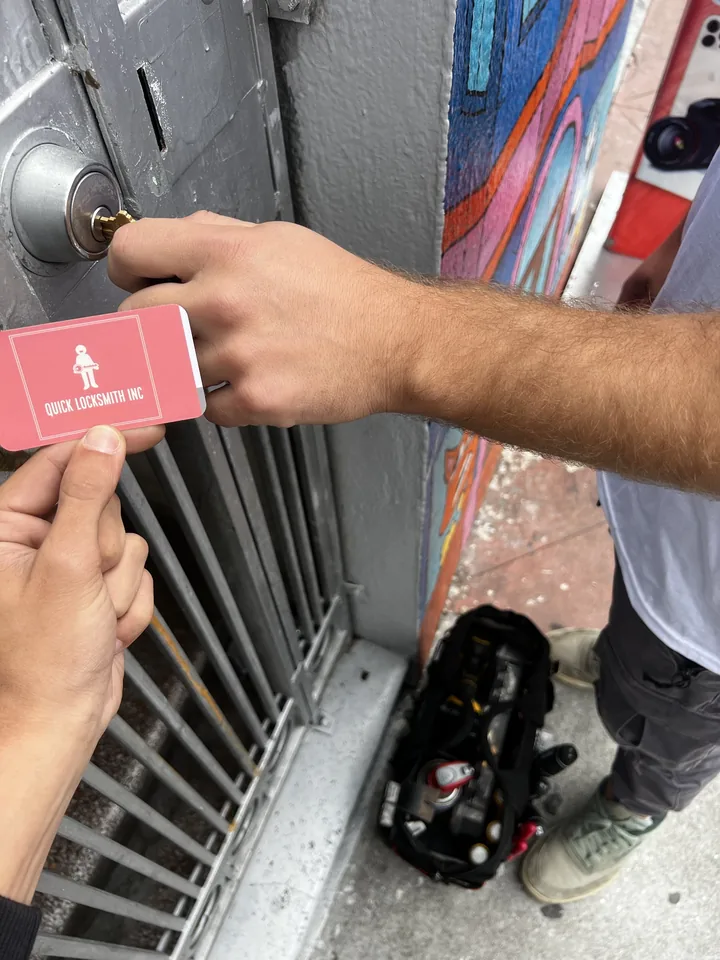
You stepped out to move the car, or take the trash down, or let the dog out, and the door closed behind you. It happens to everybody eventually. In this city it usually happens on a stoop, in the wind, with your phone at nine percent.
What matters now is that somebody gets there and opens it without wrecking your door.
How Gadi opens a door
Almost always by picking it. A standard San Francisco apartment deadbolt opens in minutes with the right tension and the right pick, and nothing about the lock changes. You keep your key, your lock, your door frame.
Some locks fight back. High security cylinders, locks that have been painted over three times, a deadbolt that was already failing before today. If picking will not work, Gadi tells you that out loud, explains what drilling means, tells you what a replacement cylinder costs, and waits for you to agree. Nobody drills a lock on a hunch.
Proving the place is yours
The door we open has to be yours. Gadi needs something that ties you to that address before the picks come out. License showing the address, a signed lease, a bill pulled up on your phone, an envelope with your name on it, or a neighbor or building manager willing to say you live there. None of this is us being awkward. Drop that rule and a locksmith becomes a burglar with better tools, which is precisely why the state writes it into the regulations.
If your ID is the thing that is locked inside, say so on the phone and we will work out what else can prove it.
Doors we open most
- Apartment front doors and flat entrances across the Mission, Noe Valley, the Castro and SoMa
- Building gates and the security gates that half of Mission Street has
- Back doors, garage side doors and basement access
- Interior doors, bedroom and bathroom, with a toddler or a cat shut in behind them
- Garage doors where the opener died and the key cylinder has never once been used
What it runs
A straight apartment lockout where the lock is healthy is the cheapest thing we do, and it is the job we quote most confidently over the phone. The number only climbs if the lock itself turns out to be the problem rather than the door, and you hear about that before it happens, not after.